


Indices Trading
Trade major global stock market indices, including the S&P 500, Nasdaq 100, Dow Jones, DAX 40 and FTSE 100. Access international markets on MT4, MT5 and the TIOmarkets trading app, with competitive spreads and flexible trading accounts.
Trading is risky

US, UK, EU & Asian indices

19 indices instruments

Up to 1:100 leverage
Explore 19 global indices
Trade popular stock market indices from the US, UK, Europe, Asia and Australia. Whether you're following the S&P 500, Nasdaq 100, DAX 40 or Nikkei 225, TIOmarkets gives you access to major international global stock markets through index CFDs.
Symbol
Bid
Ask
Spread

The prices on this page are indicative. Prices for instruments with lower liquidity such as but not limited to exotic currency pairs, stocks and indices are not refreshed as often as commonly traded instruments. Please check inside your MT4/MT5 platform for latest live prices
What is indices trading?
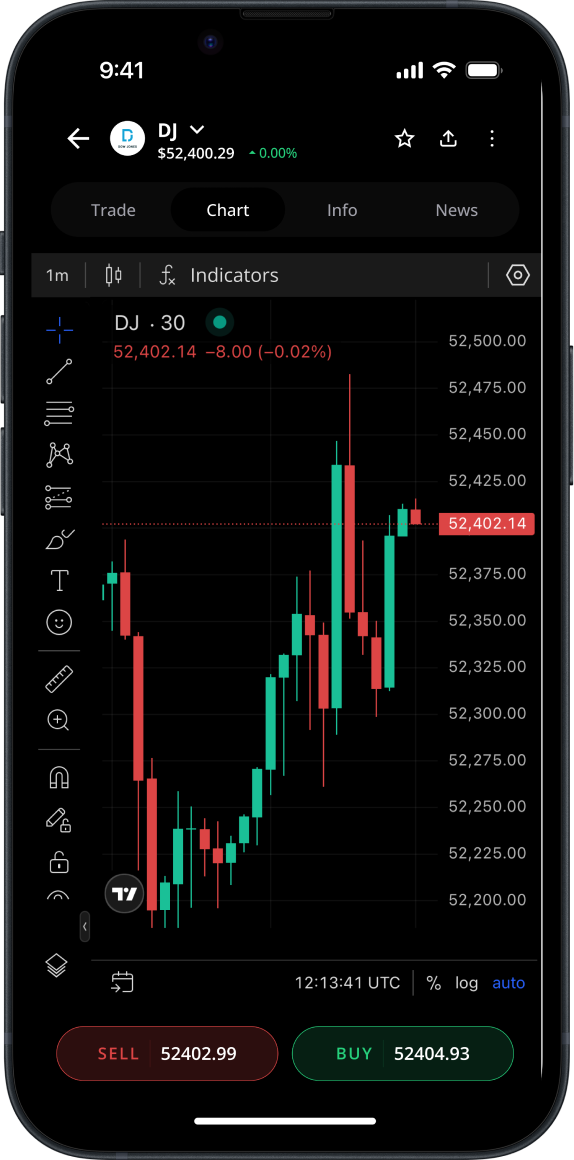
Indices trading involves speculating on price movements in stock market indices, which measure the collective performance of a selected group of companies.
A stock market index may represent companies from a particular country, industry sector or market segment. Indices are widely used to monitor overall market performance and compare how different stock markets are performing.
For example, the S&P 500 tracks approximately 500 leading US companies, while the FTSE 100 represents major companies listed on the London Stock Exchange.
With TIOmarkets, you can trade indices through contracts for difference (CFDs), allowing you to take long or short positions on indices price movements without buying the underlying company shares. Both rising and falling markets can result in profits or losses.
How does indices trading work?
Indices trading involves speculating on whether the value of a stock market index will rise or fall. Instead of buying shares in each company represented by an index, you trade a CFD based on movements in the index's price.
For example, the S&P 500 tracks the performance of major US companies.

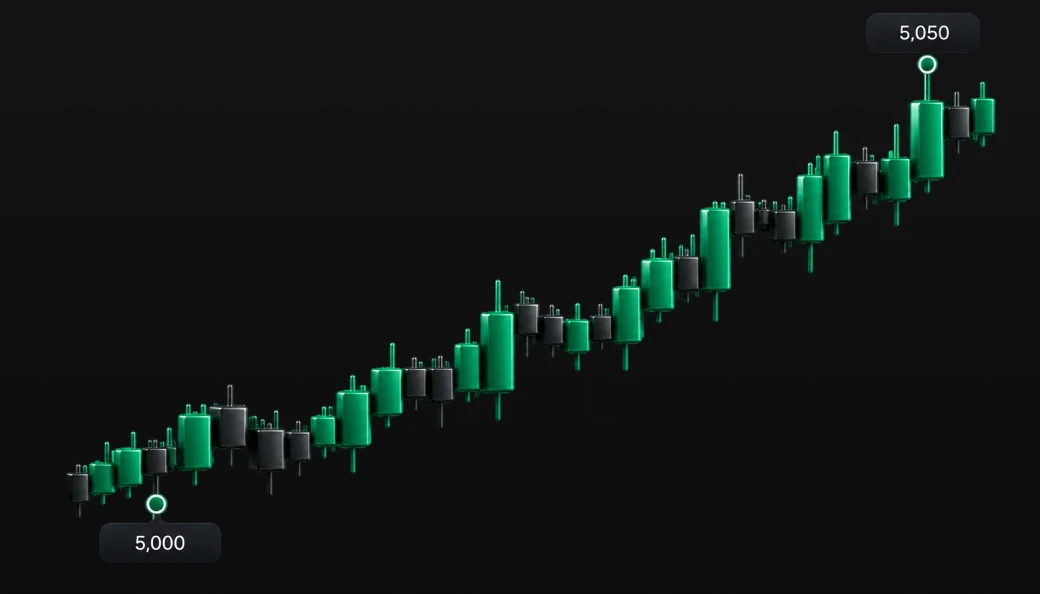
Buying the S&P 500
If the S&P 500 rises from 5,000 to 5,050 points, a buy position gains value.

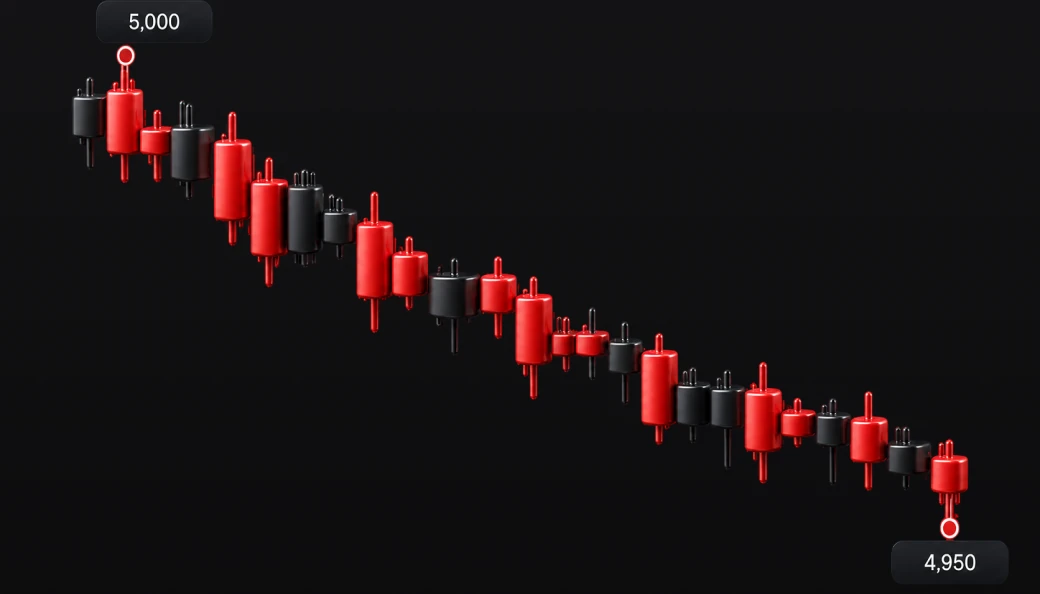
Selling the S&P 500
If the S&P 500 falls from 5,000 to 4,950 points, a sell position gains value.
In either case, an adverse price movement against your position will cause a loss. Your actual trading result also depends on position size, spreads, commissions and other applicable costs.
What moves indices prices?
Stock market indices respond to the performance of their constituent companies, as well as wider economic, financial and political developments. Factors that influence index prices include:

Corporate earnings
Company financial results and earnings expectations can influence index performance, particularly when large companies have a significant weighting.

Interest rates
Central bank decisions and changes in borrowing costs can influence equity market valuations.

Economic data
Inflation, employment, economic growth and other indicators affect market expectations.

Market sentiment
Changes in investor confidence and risk appetite can influence currency demand.

Geopolitical developments
Elections, trade policies and international events can create uncertainty and volatility.

Sector performance
Strong movements in industries such as technology, banking or energy can have a substantial effect on indices with high exposure to those sectors.
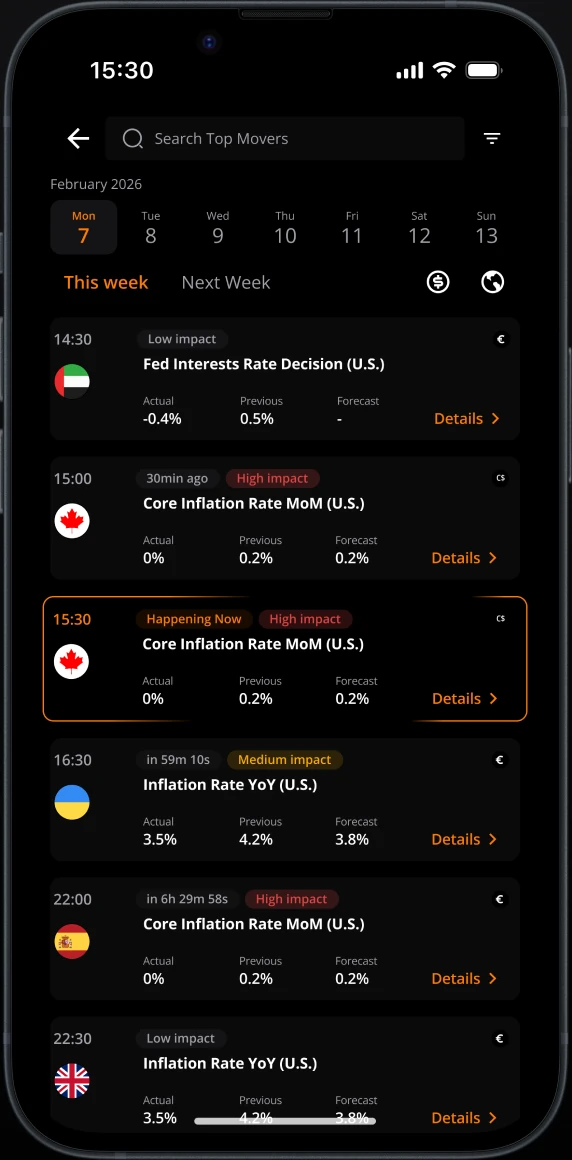
Because several factors interact at once, index prices can move unexpectedly, particularly around major economic announcements and corporate earnings releases.
Start trading in minutes
This is how it works

Register
Complete your profile and create your account, it only takes a few minutes

Verify
Upload your proof of identity and address, this is required before withdrawal

Fund
Choose from convenient local and international methods and deposit instantly
Trade
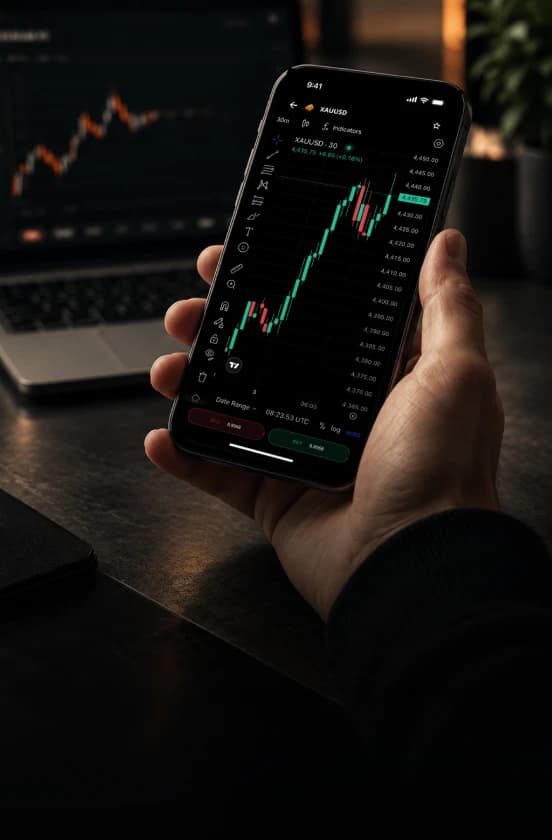
Download the platform, transfer funds to your account, log in and start trading
Trading is risky
Indices trading FAQs
What is indices trading?
Indices trading involves speculating on changes in the value of a stock market index, which measures the collective performance of a group of companies. With TIOmarkets, index CFDs allow you to trade rising or falling index prices without purchasing the underlying shares.Compare trading accounts.
Which indices can I trade with TIOmarkets?
19 Indices, including the S&P 500, Nasdaq-100, Dow Jones, FTSE 100, DAX 40, Nikkei 225 and Hang Seng. Available instruments cover major global equity markets as well as the US Dollar Index. Check inside the trading platform for the full list.
Can I buy and sell stock market indices?
Yes. Indices CFDs allow you to open buy positions when you expect an index to rise and sell positions when you expect it to fall. Both directions involve risk, and an adverse price movement can result in losses.
What leverage is available for indices trading?
TIOmarkets offers leverage up to 1:100 on eligible index CFDs. Available leverage varies by instrument and may be lower depending on the applicable margin requirements, account and jurisdiction.
What are the costs of indices trading?
Indices trading costs can include spreads, commissions and overnight financing charges. Total trading costs depend on the index, account type, position size and how long the position remains open.Learn more about trading fees.
What are the trading hours for index CFDs?
Trading hours vary according to the index and its underlying market. Some index CFDs may be available outside regular stock exchange hours, although trading breaks, holidays and other restrictions can apply. Check the trading platform for current instrument schedules.
Which trading platforms can I use to trade indices?
TIOmarkets offers MetaTrader 4, MetaTrader 5 and the TIOmarkets mobile trading app.Compare trading platforms.
Are you ready to get started?
Join 270,000+ accounts opened in over 170 countries and discover why traders choose TIOmarkets as their trusted trading partner
Trading is risky


44 reviews