


US Payrolls Surge 162,000 as July Revised From Loss to Gain
BY Ahmed Osama
|September 4, 2026US nonfarm payrolls rose by 162,000 in August, roughly three times the 55,000 the market expected, and the unemployment rate held at 4.1%, the Bureau of Labor Statistics reported on Friday.
The revisions matter as much as the headline. July was revised from a loss of 23,000 to a gain of 21,000, and June was raised from 20,000 to 31,000. Together, the two months are 55,000 higher than previously reported.
That single change removes the argument that the US labour market was contracting, and it lands eight days after Federal Reserve Chair Kevin Warsh used his Jackson Hole address to say the central bank still has work to do on inflation.
The market response was immediate. The dollar firmed, and gold, the euro and equity index futures all moved lower.

The Setup at a Glance
- Nonfarm payrolls: +162,000 in August, against a 55,000 consensus
- Unemployment rate: 4.1%, unchanged and in line with forecasts
- July revised from -23,000 to +21,000; June from +20,000 to +31,000; combined revision +55,000
- August's gain was more than five times the 31,000 monthly average of the prior 12 months
- Average hourly earnings rose 0.3% on the month to $37.75, and 3.1% over the year
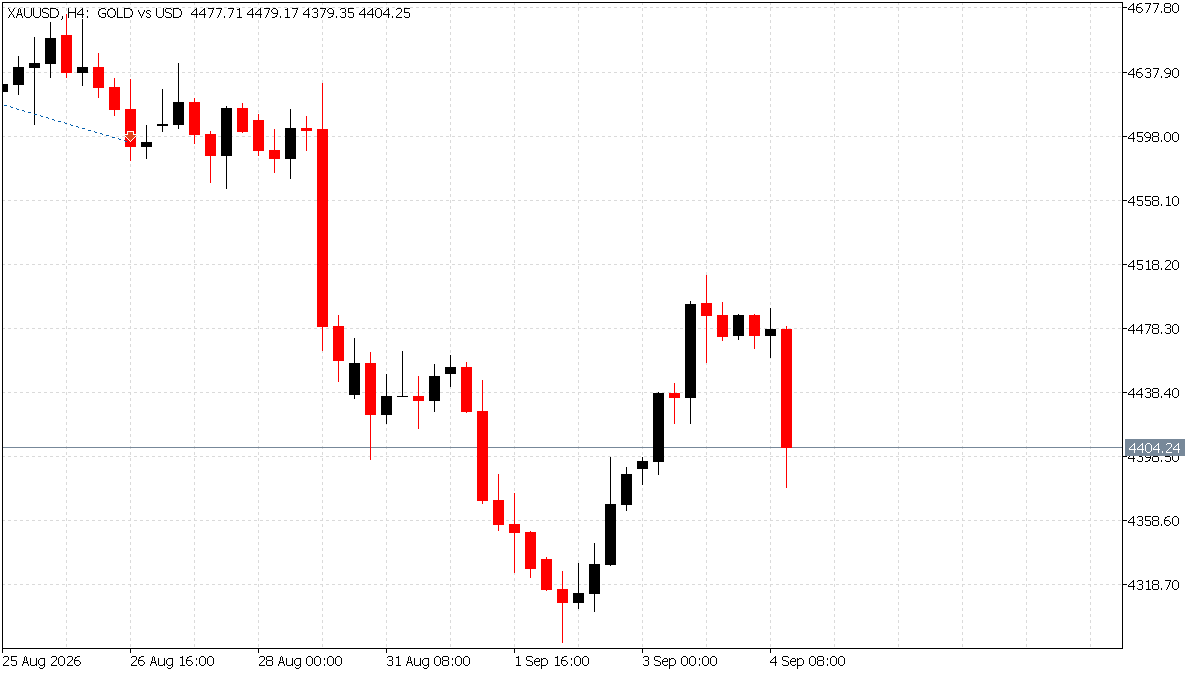
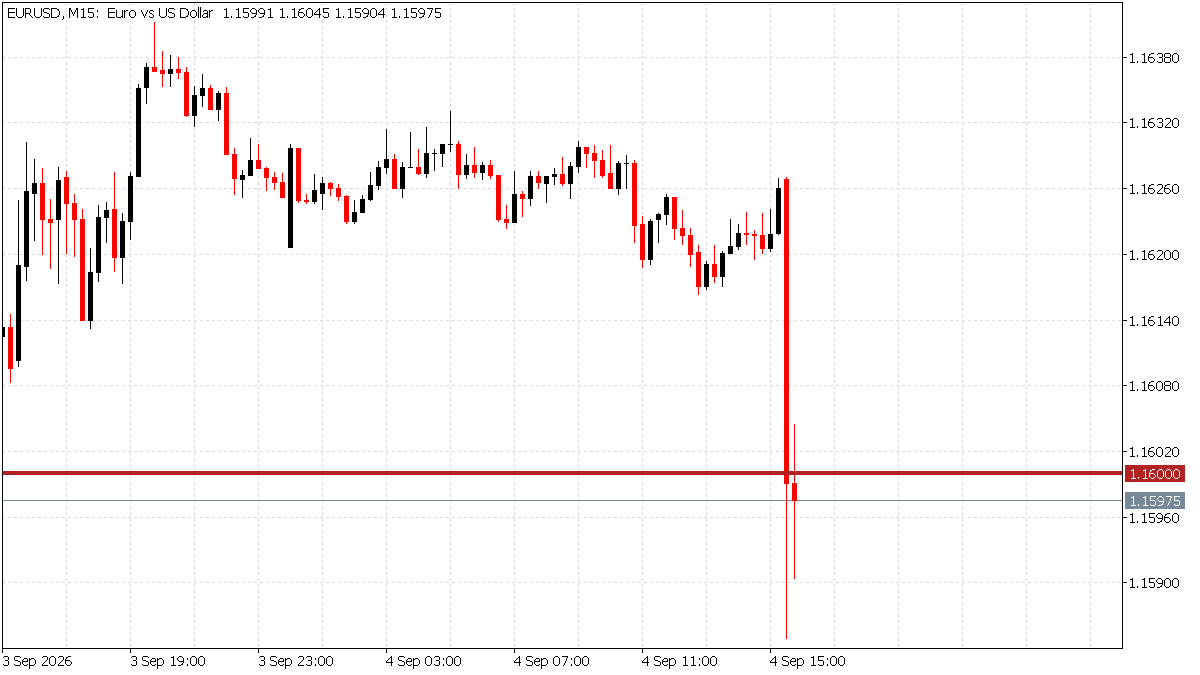
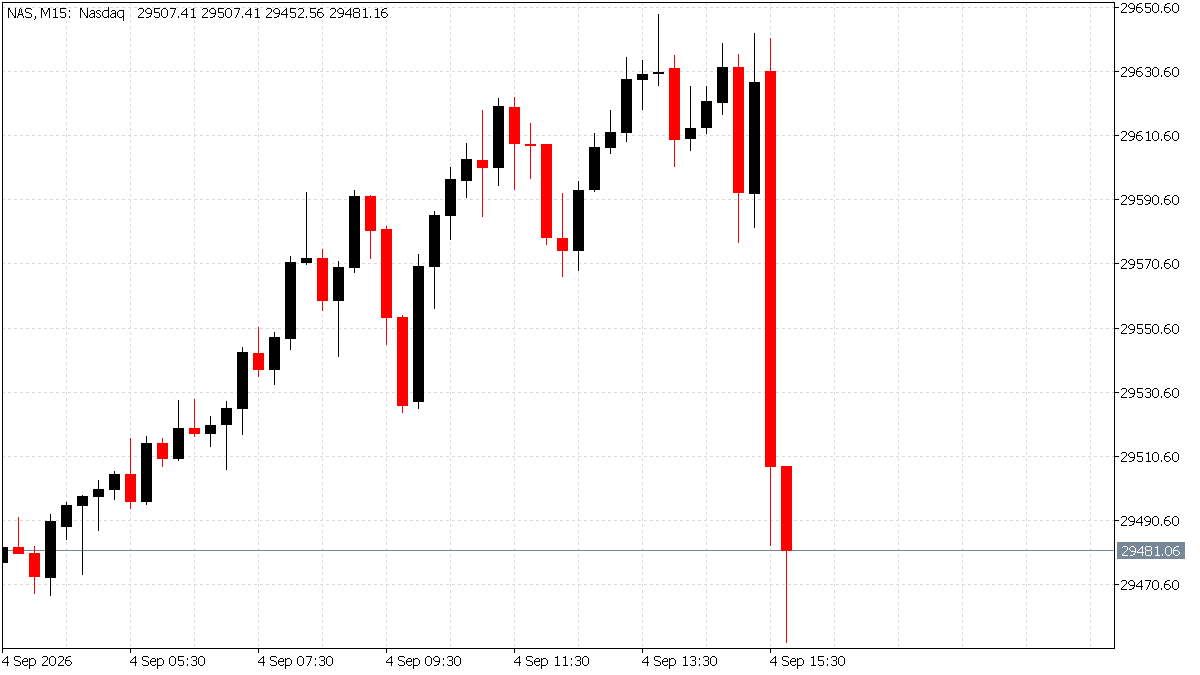
- Market reaction: gold slipped below $4,400, EUR/USD fell below 1.1600, and Nasdaq 100 futures traded below 29,500
- Gains were narrow: food services and local government education accounted for roughly 101,000 of the total
- The information sector lost 23,000 jobs, extending a run of declines
What the report actually showed
The establishment survey
Payrolls rose 162,000, against an average monthly gain of just 31,000 over the prior 12 months. The three-month average climbed to 71,000 from 38,000.
Breadth improved as well. The diffusion index, which measures the share of industries adding jobs, rose to 55.6 from 52.8, indicating gains were spread across more sectors rather than concentrated in one or two.
Where the jobs came from:
- Food services and drinking places: +59,000, far above the 12,000 monthly average of the prior year
- Local government education: +42,000, largely offsetting a decline the previous month
- Construction: +22,000
- Manufacturing: +16,000, now up 58,000 since a low in December 2025
- Health care: +13,000, but slower than the 32,000 monthly average of the prior year
Where jobs were lost:
- Information: -23,000, with declines in computing infrastructure and data processing (-8,000), publishing (-7,000) and broadcasting (-5,000)
- Financial activities: -11,000
The household survey
The unemployment rate held at 4.1%, with 7.0 million people unemployed, little changed.
Two details point to genuine improvement:
- Part-time employment for economic reasons fell by 414,000 to 4.4 million. These are people who wanted full-time work but could not find it
- The broader U-6 underemployment measure fell to 7.7% from 7.9%
Two details point the other way:
- Long-term unemployment rose to 1.9 million, now 27.0% of all unemployed people
- Participation rose to 61.6% but remains 0.5 percentage points below January
Why the revision matters more than the headline
Worth setting out plainly, because it changes the policy argument rather than merely adding to it.
Until Friday morning, the official record showed the US economy shedding 23,000 jobs in July. That figure had been central to the case for the Federal Reserve holding rates, and it was cited repeatedly through August as evidence the labour market was deteriorating.
That figure no longer exists. July is now a gain of 21,000, and the two-month revision totals 55,000.
The consequence is straightforward. The dovish argument rested substantially on a labour market that appeared to be contracting. With July revised into positive territory and August coming in at more than five times trend, that evidence has been withdrawn.
Wages are the counterweight. Average hourly earnings rose 3.1% over the year, which is firm but not accelerating in a way that would force action on its own.
Market reaction
Markets entered the release positioned for a softer print. Federal Reserve Governor Christopher Waller's comments on Thursday had been read as less hawkish, pushing Treasury yields lower and lifting risk assets: the Dow gained 1.18% on the day and gold rose nearly 2%.
That positioning reversed on the release.
| Instrument | Before release | After release |
| Gold (XAU/USD) | around $4,472 | below $4,400 |
| EUR/USD | upper 1.16s, capped at 1.1700 | below 1.1600 |
| Nasdaq 100 futures | around 29,640 | below 29,500 |
| S&P 500 futures | around 7,760 | Below 7,730 |
| Dow futures | around 53,710 | Below 53,550 |
Levels are indicative and approximate, vary by venue and contract, and should be verified against a live market feed.
The pattern is consistent across all three assets, which points to a single driver rather than instrument-specific news: a repricing of Federal Reserve expectations that lifted the dollar and pressured everything quoted against it.
Gold
Gold entered the release just below $4,500, a level that had capped it on Thursday, with the 200-day moving average cited near $4,534 above. It has since traded below $4,400, giving back Thursday's gain and more.
The mechanism is direct. Gold pays no income, so its opportunity cost rises when rate expectations rise. A payrolls print at three times consensus, combined with an upward revision that removes the contraction narrative, strengthens the case for tighter policy and works against the metal on both channels: higher expected real yields and a firmer dollar.
The technical significance is that the recovery has been undone. Gold had climbed from the late-August low toward $4,500 over two sessions. Trading below $4,400 returns it beneath the zone it had reclaimed, which makes that area the immediate reference on any attempt to recover.
EUR/USD
The euro had benefited through late August from dollar weakness driven by Treasury buyback operations and a soft data run, reaching the upper $1.16s before repeatedly failing at 1.1700. It has now fallen below 1.1600.
That advance was built on the absence of expected Fed tightening. This report supplies precisely the evidence that assumption excluded, which explains why the reversal has been sharper than the size of the move alone would suggest.
The asymmetry is worth noting. The European Central Bank held its deposit rate at 2.25% in July and has given no signal of near-term movement. With the euro side static and the dollar side repricing, the pair's direction is currently a dollar question rather than a euro one.
Losing the 1.1600 handle places the pair back inside the range it occupied before the August advance, which changes the technical read from consolidation beneath resistance to retracement of the move.
Nasdaq 100
Equity index futures had firmed on Thursday's dovish reading, with the Nasdaq 100 contract near 29,640 ahead of the release. It has since traded below 29,500.
The equity response to a strong jobs report is genuinely two-sided, which is why the move here has been more contained than in gold or currencies:
- Supportive: stronger employment means stronger consumption, and consumption drives corporate revenue
- Restrictive: higher rate expectations raise discount rates, which compresses the present value of distant earnings and weighs disproportionately on long-duration technology shares
The second effect has dominated so far, which is the usual pattern when a data surprise is large enough to move rate expectations materially.
One detail from the report bears directly on the index. The information sector shed 23,000 jobs, with losses concentrated in computing infrastructure, data processing and web hosting. That is a labour-market signal from within the technology complex itself, and it sits awkwardly against the broader strength in the headline.
The honest read on composition
The headline is strong. The composition is narrower than it appears.
Roughly 101,000 of the 162,000 came from two categories: food services and drinking places (+59,000) and local government education (+42,000).
Both deserve qualification. Local government education largely offset a decline the previous month, and the BLS notes the category has shown little net change since January 2025. Food services gains were well above trend but are historically volatile.
Set against that, the diffusion index did improve, manufacturing extended its recovery, and the revisions were broad rather than isolated.
The balanced conclusion: this is a materially stronger report than expected, and the revision genuinely changes the picture. But a print driven substantially by restaurants and school-district hiring is not the same as broad-based acceleration, and one month does not establish a trend.
Canada also reported
Canadian employment fell 41,700 in August against expectations of a 15,100 gain, after a 75,100 increase in July. The unemployment rate held at 6.4%.
The divergence between the two North American labour markets on the same morning is unusual and relevant to anyone following USD/CAD.
What comes next
| Date | Event |
| 10 September | US producer price index for August |
| 11 September | US consumer price index for August |
| Mid-September | Federal Reserve policy meeting, projections and press conference |
Inflation data now carries more weight than usual. With the labour-market argument for restraint weakened, the September decision turns more squarely on whether price pressures are easing.
Conclusion
August payrolls came in at 162,000 against a 55,000 forecast, with unemployment steady at 4.1% and wages up 3.1% over the year.
But the revision is the more consequential number. July moved from a loss of 23,000 to a gain of 21,000, and the two-month total rose by 55,000. The evidence that the labour market was contracting has been withdrawn.
The market response was uniform. Gold below $4,400, EUR/USD below 1.1600 and Nasdaq futures below 29,500 all reflect the same repricing rather than three separate stories.
Composition tempers the reading. Two categories supplied roughly 101,000 of the gain, and the information sector continued to shed jobs.
Next week's inflation data now determines how much of this the Federal Reserve acts on.
This article is market commentary for educational purposes only. It does not constitute investment advice, does not guarantee future market performance, and contains no forecast of central bank decisions or future price direction. Employment figures are sourced directly from the US Bureau of Labor Statistics Employment Situation release for August 2026, published 4 September 2026; August and July figures are preliminary and subject to revision. Market levels cited are indicative and approximate, reflect the period immediately around the release, differ between spot, futures and CFD quotes and between venues, and should be verified against a live market feed before any trading decision

Risk disclaimer: CFDs are complex instruments and come with a high risk of losing money rapidly due to leverage. You should consider whether you understand how CFDs work and whether you can afford to take the high risk of losing your money. Never deposit more than you are prepared to lose. Professional client’s losses can exceed their deposit. Please see our risk warning policy and seek independent professional advice if you do not fully understand. This information is not directed or intended for distribution to or use by residents of certain countries/jurisdictions including, but not limited to, USA & Countries included in the OFAC sanction list. The Company holds the right to alter the aforementioned list of countries at its own discretion.
TIOmarkets offers an exclusively execution-only service. The views expressed are for information purposes only. None of the content provided constitutes any form of investment advice. The comments are made available purely for educational and marketing purposes and do NOT constitute advice or investment recommendation (and should not be considered as such) and do not in any way constitute an invitation to acquire any financial instrument or product. TIOmarkets and its affiliates and consultants are not liable for any damages that may be caused by individual comments or statements by TIOmarkets analysis and assumes no liability with respect to the completeness and correctness of the content presented. The investor is solely responsible for the risk of his/her investment decisions. The analyses and comments presented do not include any consideration of your personal investment objectives, financial circumstances, or needs. The content has not been prepared in accordance with any legal requirements for financial analysis and must, therefore, be viewed by the reader as marketing information. TIOmarkets prohibits duplication or publication without explicit approval.
Join us on social media



Authors BIO

An experienced financial analyst and educator with over 8 years of expertise covering gold, forex, and global financial markets. Ahmed specializes in blending price action analysis with macroeconomic data to accurately interpret market movements, providing readers with comprehensive educational insights into trading and the financial world.