

Trade Stock CFDs
低手数料で800以上の株式をロングまたはショート
取引にはリスクがあります
取引元
0.01 ティックスプレッド
取引元
$0 委託
まで
1: 20倍のレバレッジ
+
800 株式
取引元
0.01 ティックスプレッド
取引元
$0 委託
まで
1: 20倍のレバレッジ
+
800 株式
Trade stocks of major companies
シンボル
Bid
Ask
スプレッド

*このページの価格は参考価格です。エキゾチック通貨ペア、株式、指数など流動性の低い商品の価格は、一般的に取引される商品ほど頻繁に更新されません。最新のリアルタイム価格については、MT4/MT5プラットフォーム内でご確認ください。
What are stocks?
Stocks, also known as shares or equities, represent ownership interest in a company. When you buy a company's stock, you're purchasing a small piece of that company, including the right to a portion of the company's earnings. Stocks are issued by companies to raise capital in order to grow the business and they can be bought and sold. However, with stock CFD trading, it allows you to speculate on the price movement without needing to own the actual stocks.
How stock CFD trading works
Trading in stock CFDs allows you to speculate on the price movements of company stock without owning the actual shares. If you think the share price is likely to rise, you can simply buy it. If you think the price of the shares is likely to fall, you can sell it.
Bid and ask prices
ロングまたはショート

Stocks are traded in lots
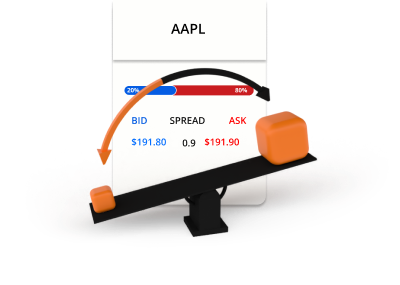
Stock trading involves leverage and margin
Stock trading example
You decide to buy 0.1 lots of Apple (AAPL) at $200 using 20:1 leverage.
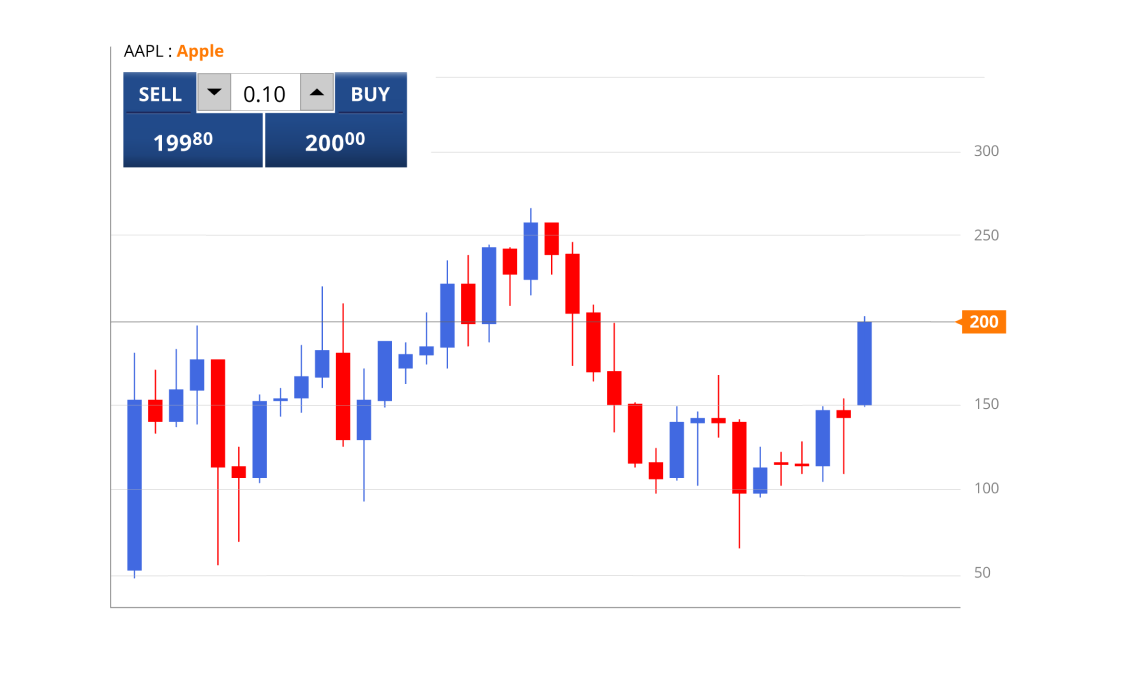
0.1 lots = 10 share CFDs of AAPL
10 share CFDs x $200 = $2,000
$2,000 / 20 = $100
Now you have opened a long position in AAPL worth $2,000. Since stock CFDs are traded using leverage, only $100 was used as margin from your trading account. After some time, the price of AAPL moves and you decide to sell.
Scenario 1
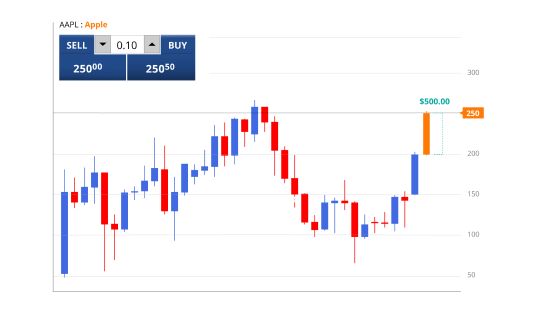
AAPL moves up from $200 to $250 and you decide to sell.
This is how the profit or loss on the trade would be calculated.
P/L = (Current price - Initial price) x Quantity
P/L = ($250 - $200) x 10
P/L = $50 x 10
P/L = $500
Scenario 2
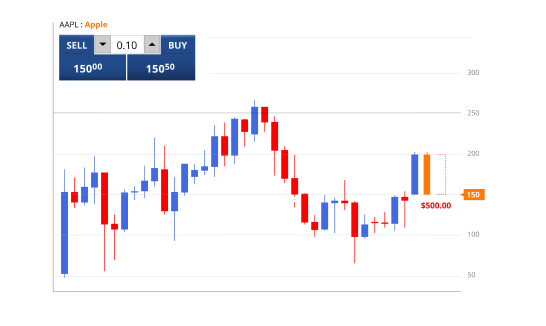
AAPL moves down from $200 to $150 and you decide to sell.
This is how the profit or loss on the trade would be calculated.
P/L = (Current price - Initial price) x Quantity
P/L = ($150 - $200) x 10
P/L = -$50 x 10
P/L = - $500
プレミアムサービスで高い費用対効果の取引
これが、あなたのような人々がTIOmarketsを選ぶ理由です。
スプレッドは0.0ピップから
当社のRaw口座で、生の変動スプレッドで取引しましょう。

手数料無料の取引
VIPブラックまたはスタンダード取引口座では、1ロットあたり0ドルから取引できます。

トレーディングプラットフォーム
デスクトップ、ウェブ、モバイル向けの高度な取引プラットフォーム

迅速な注文処理
ミリ秒単位での効率的かつ信頼性の高い注文処理

無制限のレバレッジ
スタンダード口座では、最大無制限のレバレッジで取引できます。

30%ロイヤリティボーナス
スタンダード口座への入金ごとにボーナスを獲得できます
マルチアセット取引プラットフォームを選択してください
デスクトップ、ウェブ、モバイルでMT4、MT5、またはTIOmarketsの取引・投資アプリを使って取引しましょう。

TIOmarketsアプリは、直感的な1つのアプリから取引、市場分析、口座管理を行うことができる強力なモバイル取引プラットフォームです。高度なTradingView統合チャート、テクニカル指標、リアルタイムの価格設定、柔軟な注文タイプ、外出先からの市場ニュースへのアクセスが含まれています。
数分で取引を開始
仕組みは次のとおりです

ステップ 1
口座開設・登録
プロフィールを完了して口座を作成します。数分で完了します

ステップ 2
本人確認
本人確認書類および住所確認書類をアップロードしてください。出金前に必要です

ステップ 3
入金
便利な国内・海外の方法から選んで、即時入金

ステップ 4
取引
プラットフォームをダウンロードし、口座へ資金を送金してログイン、取引を開始
取引にはリスクがあります