


NFP Preview: Will Jobs Data Push the Fed to Hike Again?
BY Ahmed Osama
|September 30, 2026The US jobs report for September is due on Friday 2 October at 8:30 a.m. ET. Payroll growth is expected to cool after August's 162,000 increase, but wages, unemployment and revisions may do more than the headline in shaping expectations for another Federal Reserve rate rise, and for the next move in the dollar, gold and EUR/USD.
NFP preview in brief
- The Bureau of Labor Statistics publishes the September nonfarm payrolls (NFP) report at 12:30 UTC on Friday 2 October.
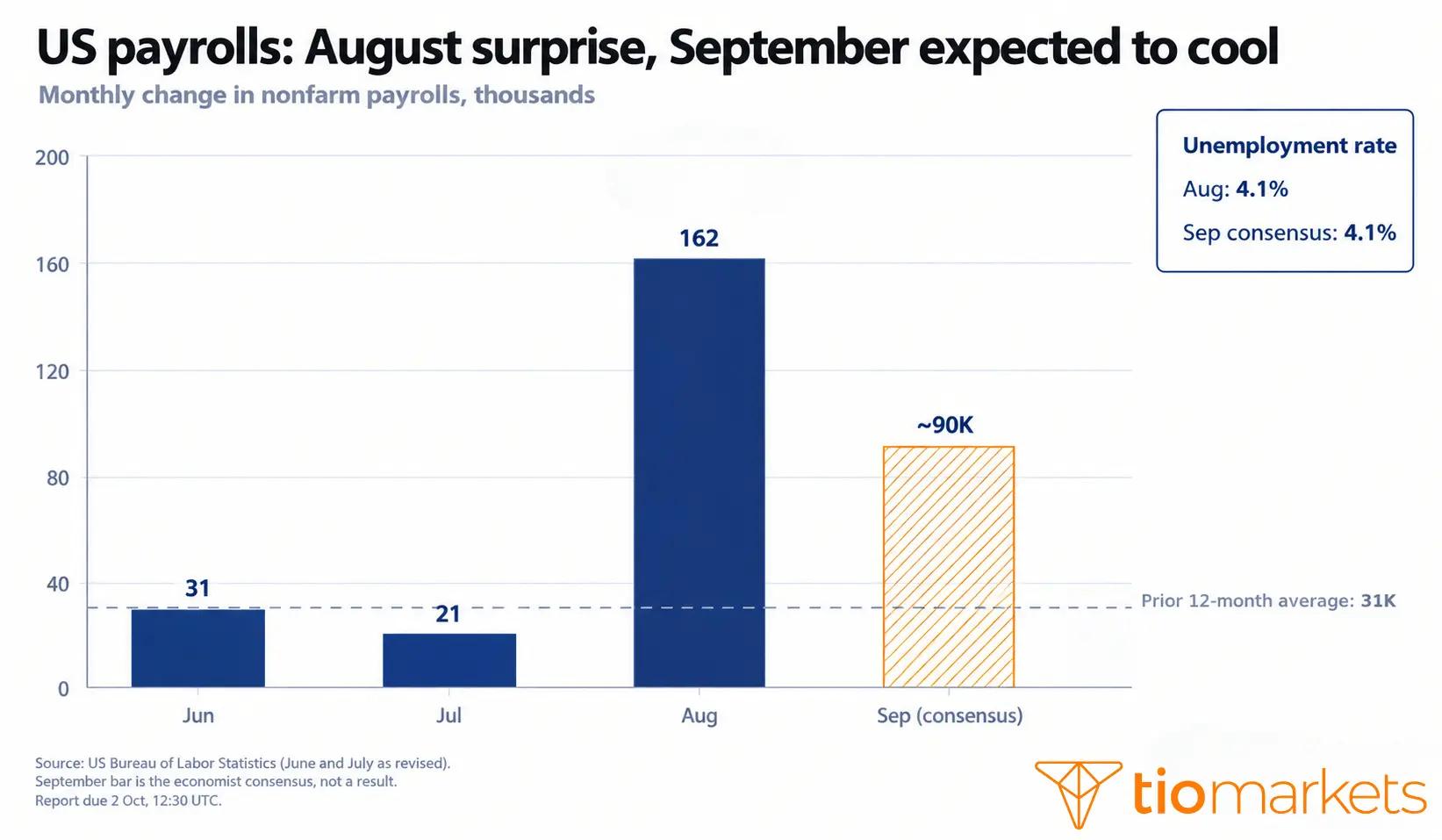
- Economists expect roughly 90,000 new jobs, down from 162,000 in August, with unemployment holding at 4.1%, a one-year low.
- The report arrives two weeks after the Fed raised rates to 3.75%–4.00%, and it is one of the main data points before the 27–28 October meeting.
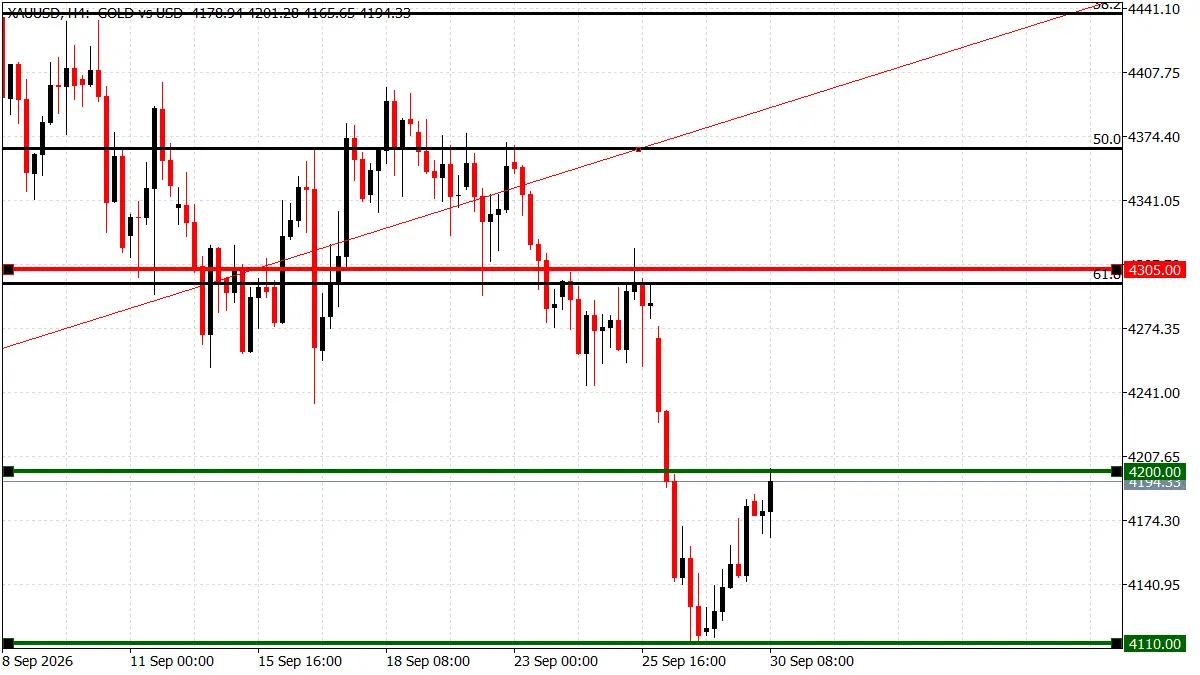
- Gold was trading near $4,200 on 30 September after falling from around $4,450 earlier in the month, while EUR/USD was near 1.1340 after dropping from about 1.1650, as a stronger dollar and higher US yields dominated.
- A result where jobs, unemployment and wages all point the same way is more likely to produce a lasting market move than a mixed one.
What is the NFP report and when is it released?
The nonfarm payrolls report, usually called NFP, shows how many jobs the US economy added or lost in the previous month, excluding farm workers. It is published on the first Friday of most months and is one of the most closely watched economic releases for currency, gold and stock-index traders.
The September report is due at 12:30 UTC on Friday 2 October, as shown on our economic calendar. It combines two surveys. The business survey produces the payroll, wage and hours figures, while the household survey produces the unemployment rate and the share of people working or looking for work, known as the participation rate.
That distinction matters because the two surveys can send different signals. A higher unemployment rate, for example, can simply reflect more people starting to look for work rather than more job losses.
What economists expect from the September NFP
Surveys of economists by Reuters and Bloomberg point to about 90,000 new jobs in September, while a FactSet survey reported by AP points to 95,000. Unemployment is expected to hold at 4.1%. KPMG expects average hourly earnings to rise 0.3% on the month and 3.2% from a year earlier.
The size of the last surprise is worth remembering. Economists expected around 53,000 jobs in August, and the report delivered 162,000, the strongest gain since March. Forecasts are estimates, so they should be treated as a guide to what markets are prepared for, not as a prediction of the result.
Why this jobs report matters after the Fed rate hike
The Fed raised its target range by a quarter point to 3.75%-4.00% on 16 September.its first increase since 2023, and described inflation as elevated. Its latest projections put the median 2026 unemployment rate at 4.1%, PCE inflation at 3.7% and the year-end federal funds rate at 4.1%, which implies one more quarter-point increase this year.
The open question is timing. CME FedWatch data showed roughly even odds of another increase at the 27–28 October meeting immediately after the September decision. That makes Friday's report a direct input into whether the next move comes in October or later.
In simple terms: strong hiring with rising wages could strengthen the case for an October hike. Clear weakness could push expectations back toward December or beyond. Higher energy costs linked to the conflict in the Middle East add to the inflation backdrop the Fed is weighing. Our Fed rate decision analysis covers the September meeting in more detail.
Four things to watch inside the NFP report
1. The jobs number and revisions
August payrolls rose by 162,000, far above the prior twelve-month average of 31,000. Food services and drinking places added 59,000 jobs and local government education added 42,000, together accounting for roughly 62% of the headline increase. Both categories can be volatile, so September will show whether the acceleration broadened or partly reversed.
Revisions deserve equal attention. The BLS revised June up by 11,000 and July up by 44,000 in the August release. A September headline near expectations could still look stronger or weaker once those earlier months are updated.
2. Unemployment and participation
The unemployment rate held at 4.1% in August, while labour-force participation rose to 61.6%. A higher unemployment rate alongside rising participation would send a different message from a higher rate caused by falling employment.
3. Wages and hours
Average hourly earnings rose 0.3% in August and 3.1% over twelve months. With the Fed focused on inflation, faster wage growth could matter even if job growth slows. The average workweek, which edged up to 34.4 hours in August, can also show whether employers are adjusting hours before headcount.
4. Hiring, quits and layoffs
The latest Job Openings and Labor Turnover Survey, released on 29 September, showed 7.1 million job openings in August, down from 7.3 million in July and below expectations, with 5.2 million hires, 3.1 million quits and 1.6 million layoffs. That describes a labour market with fewer vacancies but no broad rise in job cuts.
The BLS preliminary benchmark estimate adds a caveat: it indicated that total employment in March 2026 may eventually be revised down by 79,000. That does not change Friday's published history, and the final revision is due in February 2027.
How the NFP report could move gold
Gold has had a difficult September. It fell from around $4,450 early in the month to a low near $4,130 in the last week of September, as higher US Treasury yields and a firmer dollar weighed on a metal that pays no interest. It has since rebounded and was testing the $4,200 area on 30 September.
Gold has been trading in the $4,150–$4,250 area. Reference levels traders are watching:
- $4,200: the level gold is currently testing
- $4,271: a former support area that gave way in late September
- $4,305: the 61.8% Fibonacci retracement of the September decline
- $4,166: the first support below
- $4,110: the late-September low
A report that is better than expected could lift yields and the dollar, which would typically add pressure on gold toward $4,166 and the September low. A report that is worse than expected could pull yields lower and support a recovery toward $4,271 and $4,305. Geopolitical demand can override that usual relationship.
How the NFP report could move EUR/USD
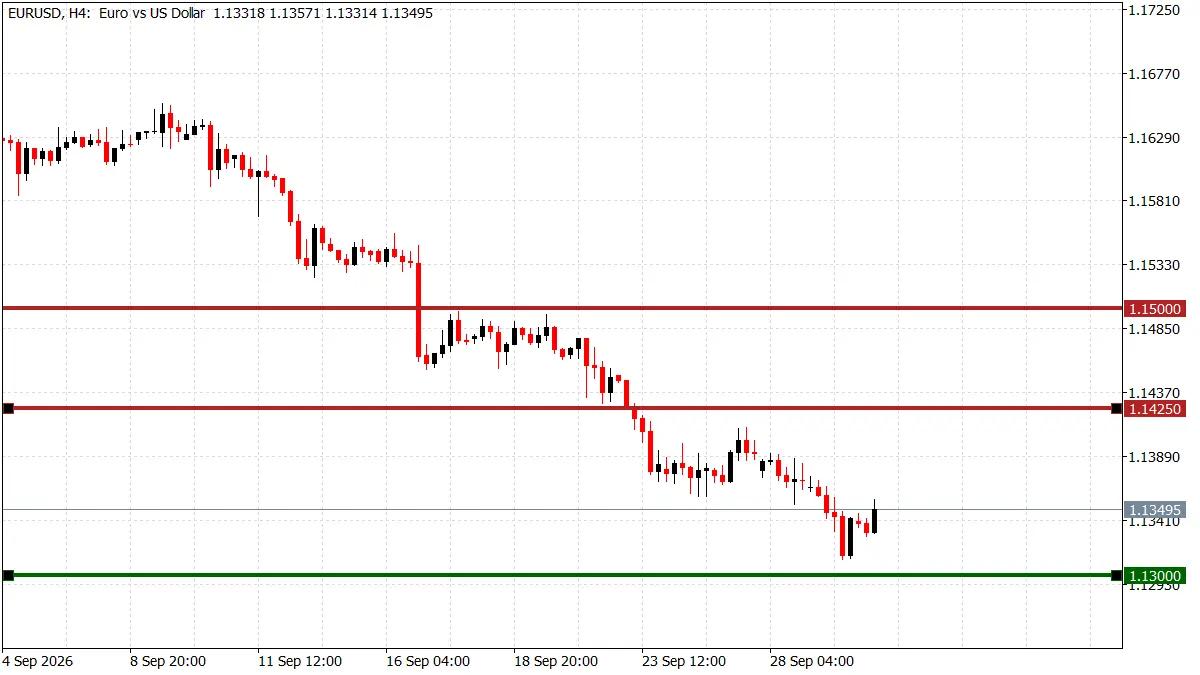
EUR/USD has fallen steadily through September, from about 1.1650 to near 1.1340, its lowest level in the period shown. That decline came even though the European Central Bank raised its deposit rate to 2.50% on 10 September, a reminder that the Fed's tightening and higher US yields have been the stronger force.
EUR/USD has been trading in the 1.1300–1.1450 area. Reference levels traders are watching:
- 1.1340: the current low area
- 1.1300: the next round-number level below
- 1.1425: the first resistance area above
- 1.1500: a former support level that gave way mid-month
A better-than-expected report could extend the dollar's strength and push EUR/USD toward 1.1300. A worse-than-expected report could trigger a rebound toward 1.1425 and possibly 1.1500, especially after such a steady decline.
All levels are context markers, not entry or exit points, and should be checked against a live price feed.
Trade Gold and EUR/USD with TIOmarkets
Take your position on major currencies and metals via CFDs. Enjoy tight spreads, fast execution, and fast, flexible funding options.
Trading is risky
Three NFP scenarios for Friday
| Scenario | What it could look like | Possible market reaction | What could change the reading |
| Better than expected | Payrolls above 150,000, unemployment at 4.1% or lower, wages up 0.3% or more on the month | The dollar and US yields could rise as October hike expectations increase; gold and EUR/USD could come under pressure; stock indices may react in a mixed way as rate concerns return | Large downward revisions to earlier months, falling participation or a shorter workweek |
| As expected | Payrolls around 50,000–130,000, unemployment at 4.1%–4.2%, wages up 0.2%–0.3% | First moves may fade as attention shifts to CPI and the October Fed meeting; different assets may react differently | A large surprise in wages or revisions |
| Worse than expected | Payrolls below 50,000 or negative, unemployment at 4.3% or higher, wages up 0.2% or less | The dollar and US yields could fall; gold and EUR/USD could gain; stock indices may weigh lower rates against growth worries | Strong wage growth, rising participation or upward revisions to earlier months |
Scenario thresholds are editorial guideposts, not forecasts or trading recommendations.
A mixed report may create the hardest reaction
The most difficult outcome is a split signal, such as strong payrolls with rising unemployment, or weak payrolls with accelerating wages. In that case, the first move in the dollar or yields may reverse as investors examine participation, revisions and sector detail. Thin liquidity around the release can amplify price gaps and slippage.
Key events and levels to watch
- Wednesday 30 September, 12:15 UTC: ADP private-sector employment for September
- Thursday 1 October, 12:30 UTC: weekly jobless claims
- Friday 2 October, 12:30 UTC: September NFP report, including payrolls, unemployment, participation, wages and hours
- Payroll guideposts: 50,000 and 150,000 mark the weaker and stronger edges of this article's scenarios; they are not official consensus levels
- Unemployment guideposts: 4.1%–4.2% is the central zone; 4.3% or higher would point to a weaker reading if household employment also falls
- Wednesday 14 October, 12:30 UTC: September CPI, the next major inflation release
- Wednesday 28 October, 18:00 UTC: Fed rate decision at the end of the 27–28 October meeting
Risks and uncertainties
Monthly employment estimates are revised and subject to sampling error. September seasonal patterns, especially in education, can complicate the first estimate. Wage growth can also change because the mix of jobs changed, rather than because every worker received a similar pay adjustment.
Market direction is not mechanical. Positioning, liquidity, geopolitical developments and energy prices can outweigh the historical relationship between payroll surprises and individual assets. The release can also generate spreads, gaps and rapid reversals before a clearer interpretation emerges.
Conclusion
Friday's NFP headline will set the initial tone, but the policy signal lies in the combination of jobs, unemployment, participation, wages, hours and revisions. With gold near $4,200 and EUR/USD near 1.1340 after a month dominated by dollar strength, the report could either extend that trend or trigger a rebound.
A strong and consistent report would support the case for another Fed rate rise in October. A clearly weaker one would shift attention toward December. Anything in between may leave the 14 October CPI report as the more decisive input for the late-October Fed meeting.

FAQ
Risk disclaimer: CFDs are complex instruments and come with a high risk of losing money rapidly due to leverage. You should consider whether you understand how CFDs work and whether you can afford to take the high risk of losing your money. Never deposit more than you are prepared to lose. Professional client’s losses can exceed their deposit. Please see our risk warning policy and seek independent professional advice if you do not fully understand. This information is not directed or intended for distribution to or use by residents of certain countries/jurisdictions including, but not limited to, USA & Countries included in the OFAC sanction list. The Company holds the right to alter the aforementioned list of countries at its own discretion.
TIOmarkets offers an exclusively execution-only service. The views expressed are for information purposes only. None of the content provided constitutes any form of investment advice. The comments are made available purely for educational and marketing purposes and do NOT constitute advice or investment recommendation (and should not be considered as such) and do not in any way constitute an invitation to acquire any financial instrument or product. TIOmarkets and its affiliates and consultants are not liable for any damages that may be caused by individual comments or statements by TIOmarkets analysis and assumes no liability with respect to the completeness and correctness of the content presented. The investor is solely responsible for the risk of his/her investment decisions. The analyses and comments presented do not include any consideration of your personal investment objectives, financial circumstances, or needs. The content has not been prepared in accordance with any legal requirements for financial analysis and must, therefore, be viewed by the reader as marketing information. TIOmarkets prohibits duplication or publication without explicit approval.
Join us on social media



Authors BIO

An experienced financial analyst and educator with over 8 years of expertise covering gold, forex, and global financial markets. Ahmed specializes in blending price action analysis with macroeconomic data to accurately interpret market movements, providing readers with comprehensive educational insights into trading and the financial world.