


Best Stocks ISA: How to Compare Stocks and Shares ISAs
BY TIOmarkets
|November 18, 2026A stocks and shares ISA is a UK individual savings account that holds investments such as shares and shelters the interest, capital gains and dividend income they produce from tax. Because the account is a tax wrapper rather than an investment, the best stocks ISA for one investor depends on what it holds and what it costs.
Written for UK investors comparing providers, the article covers the 2026/27 allowance, eligible products, DIY and managed approaches, how platform fees change with pot size, and the protection that applies if a firm fails. The tax shelter leaves market risk untouched: share prices can fall quickly, and an investor can lose all the money paid in.
What Is a Stocks and Shares ISA?
An ISA is not a product with a return of its own but a set of HM Revenue & Customs (HMRC) rules that removes UK tax from whatever sits inside it. ISAs replaced personal equity plans (PEPs) in 1999 with an annual limit of £7,000, of which only £3,000 could go into cash. The limit has stood at £20,000 a year since 2017, combined across all of a holder's accounts.
For the 2026/27 tax year, the ISA allowance is £20,000 across all types of ISA, and the Lifetime ISA has its own £4,000 limit. A planned £12,000 cap on cash ISA contributions for under-65s from April 2027 was reversed in the Budget. The stocks and shares ISA allowance is therefore the £20,000 total less anything paid into other ISAs that year.
HMRC figures released in September 2026 show that savers paid into a record 16.8 million adult ISAs in tax year 2024-25, up from 15 million a year earlier. Stocks and shares ISA subscriptions rose 19.7%, or £6.1 billion.
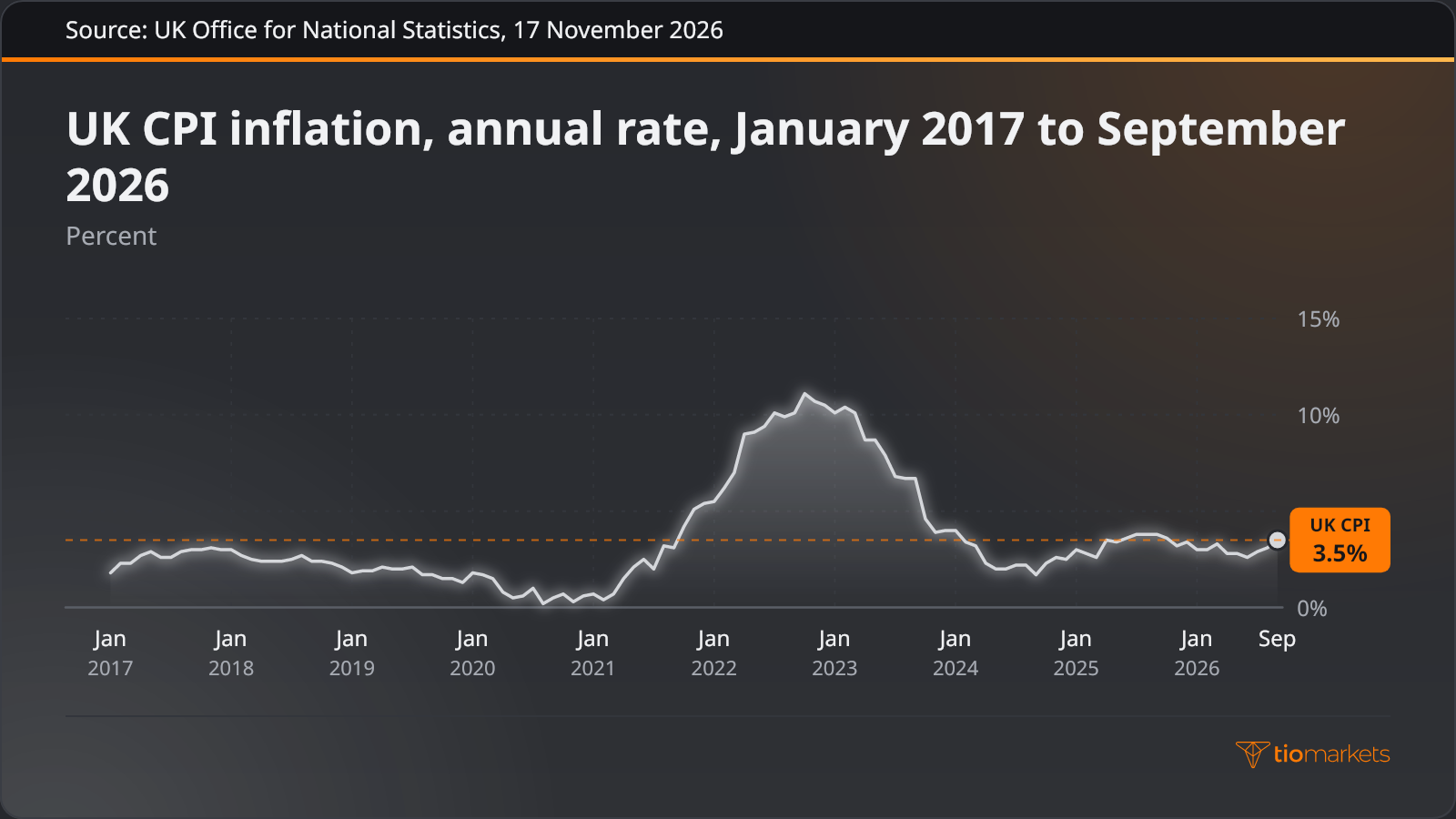
The £20,000 limit is fixed in cash terms, so rising consumer prices reduce what it buys. UK CPI inflation, the annual change in consumer prices, was 3.5% in the year to September 2026 and has varied from year to year since the limit was set in 2017.
In an ordinary dealing account, a shareholding may incur capital gains tax, the tax on the profit from selling an asset for more than it cost, and dividend tax on the income paid out. Inside an ISA, the same shares incur neither. Stamp duty still applies to share trades, and ISA holdings are not sheltered from inheritance tax. The shares can still lose value: a concentrated holding magnifies losses as well as gains, losses can build quickly, and an investor can lose all the money paid in.
What Shares Can You Hold in an ISA?
HMRC rules set out the qualifying investments, the assets an ISA may hold. Individual listed shares qualify, and so do fractional shares, which give an investor part of a single share, after HMRC reversed its earlier position that they were ineligible.
Leveraged products are excluded: CFD trading and spread betting are not permitted within ISAs or self-invested personal pensions (SIPPs). A contract for difference (CFD) tracks an asset's price without ownership and is opened with margin, a deposit that controls a larger position. The question 'can you hold CFDs in an ISA' therefore has a one-word answer: no. Outside the wrapper, that leverage magnifies losses as well as gains, losses can build quickly, and a trader can lose all the money deposited.
| Product | Allowed in a stocks and shares ISA | Reason |
| Individual listed shares | Yes | A qualifying investment; stamp duty applies to share trades |
| Fractional shares | Yes | Allowed since HMRC reversed its earlier position |
| CFDs | No | A leveraged derivative; not permitted within ISAs or SIPPs |
| Spread bets | No | A leveraged product; not permitted within ISAs or SIPPs |
DIY, Ready-Made or Managed: Ways to Use a Stocks and Shares ISA
Investors broadly choose among three approaches inside the wrapper. A do-it-yourself (DIY) investor selects individual company shares. An index tracker fund aims to match the return of an index such as the FTSE 100, made up of 100 large companies listed in London. A managed portfolio passes selection and rebalancing to a professional manager, usually for a higher charge.
| What the investor wants | The approach used for it | How it works | Main risk |
| Control over each holding | Individual shares (DIY) | The investor researches, buys and sells each company's shares | Few holdings concentrate risk; one company failing can erase the sum invested in it |
| Broad market exposure | Index tracker fund | Holds the shares in an index, such as the FTSE 100, in line with their weights | Falls with the index; no manager acts to limit a decline |
| Decisions delegated to a professional | Managed portfolio | A manager selects and rebalances holdings to a stated risk level | Higher charges; can still lose value and lag the market |
| Income paid out by companies | Dividend shares or income funds | Companies distribute part of their profits as dividends | Dividends can be cut or stopped, and share prices can fall |
The approaches differ in where risk sits, not in whether it exists. A handful of shares magnifies losses as well as gains, because one company's results move a large part of the total; diversification across companies and sectors spreads that exposure without removing market risk. Any of the three can lose value quickly in a broad market fall, and a holder can lose all the money invested.
How to Compare ISA Platform Fees
Charges are the one part of an ISA's result known in advance. A platform fee is the provider's charge for holding the account, and dealing charges apply to each order. The fund ongoing charges figure (OCF) is a fund's annual running cost, taken as a percentage of its value, and FX fees apply when pounds are converted to buy overseas shares.
A flat platform fee weighs heavily on a small pot and lightly on a large one, while a percentage fee scales with the pot, so the cheapest ISA for one investor can be the dearest for another. Two hypothetical providers show the crossover in four steps:
- Provider A charges a flat £120 a year, and Provider B charges 0.25% of the pot a year.
- On a £10,000 pot, Provider A costs £120 and Provider B costs £25.
- On a £100,000 pot, Provider A still costs £120, while Provider B costs £250.
- Dividing the flat fee by the percentage rate gives the crossover: £120 divided by 0.25% is £48,000, the pot size at which both cost £120.
The crossover covers the platform fee alone. Dealing charges, OCFs and FX fees can reverse the ranking, particularly for an investor who trades often, and a pot that grows or falls can move its holder to the other side of the line.
Growth vs Dividend Shares in an ISA
Growth shares are shares in companies that reinvest most of their profits, so any return comes mainly through the share price. Dividend shares are shares in companies that pay part of their profits to shareholders as income. Inside an ISA, the growth share avoids the capital gains tax a profitable sale could create, and the dividend share avoids dividend tax.
Neither label describes a future result: a rising share price is history, and dividends can be cut when profits weaken. A few shares of either kind magnify losses as well as gains, since a single profit warning, a company's notice that profits will fall short of expectations, can move a large part of the pot. Losses can build quickly, and an investor can lose all the money invested in a company that fails.
How to Choose the Best Stocks ISA Provider
With the approach and the fee structure settled, providers can be compared on the same points in six steps:
- Confirm that the provider is authorised by the Financial Conduct Authority (FCA), the UK regulator of investment firms.
- Check that the investment range covers the chosen approach: individual or fractional shares, tracker funds or managed portfolios.
- Total the annual cost at the investor's own pot size and trading frequency, including platform, dealing, OCF and FX charges.
- Read the ISA transfer terms, which govern moving an ISA to another provider with its tax status intact, including any exit charge.
- Check Financial Services Compensation Scheme (FSCS) cover: £85,000 per person per firm for investments, in cases such as firm insolvency, fraud or mismanagement.
- Review the research, charting and account tools the platform provides for the chosen approach.
The checklist compares providers, not outcomes. FSCS investment cover is separate from the deposit limit for cash, which rose from £85,000 to £120,000 per eligible depositor on 1 December 2025, and it does not extend to losses from market fluctuations. Since 6 April 2024, an investor can also pay into more than one stocks and shares ISA in the same tax year, provided total payments stay within the £20,000 allowance.
Common Stocks and Shares ISA Mistakes
Most errors stem from treating the wrapper as the investment or a past result as a guide to the next one:
- Chasing last year's top performers. Buying what rose most assumes the rise will repeat, but past performance is not a reliable indicator of future results.
- Ignoring fees. A percentage charge is taken from the whole pot every year, and money removed earns no further return, so the cost compounds over time.
- Over-concentrating. A pot held in two or three companies magnifies losses as well as gains; the principles of a balanced investment portfolio address that exposure.
- Confusing FSCS cover with protection against market losses. The scheme responds to firm insolvency, fraud or mismanagement, not to falling share prices.
Combined, these errors leave a pot carrying the full force of market risk on a fee structure that may not fit its size: losses can build quickly in a falling market, and the holder can lose all the money paid in.
Conclusion
A stocks and shares ISA settles the tax question and leaves the investment question open. The best stocks ISA is the account whose holdings fit the investor's approach and whose charges fit the pot it actually holds. A flat £120 fee costs more than a 0.25% fee on a £10,000 pot and less on a £100,000 pot, so a cost comparison means something only at a specific pot size.
The arithmetic measures charges, which are known, and says nothing about returns, which are not. Share values can fall as well as rise, a concentrated holding magnifies losses as well as gains, losses can build quickly when markets fall, and an investor can lose all the money paid into the account. Neither the tax wrapper nor FSCS cover changes any of those risks.
Trade FTSE 100 with TIOmarkets
Take your position on global markets via CFDs. Enjoy tight spreads, fast execution, and fast, flexible funding options.
Trading is risky
FAQ
Risk disclaimer: CFDs are complex instruments and come with a high risk of losing money rapidly due to leverage. You should consider whether you understand how CFDs work and whether you can afford to take the high risk of losing your money. Never deposit more than you are prepared to lose. Professional client’s losses can exceed their deposit. Please see our risk warning policy and seek independent professional advice if you do not fully understand. This information is not directed or intended for distribution to or use by residents of certain countries/jurisdictions including, but not limited to, USA & Countries included in the OFAC sanction list. The Company holds the right to alter the aforementioned list of countries at its own discretion.
TIOmarkets offers an exclusively execution-only service. The views expressed are for information purposes only. None of the content provided constitutes any form of investment advice. The comments are made available purely for educational and marketing purposes and do NOT constitute advice or investment recommendation (and should not be considered as such) and do not in any way constitute an invitation to acquire any financial instrument or product. TIOmarkets and its affiliates and consultants are not liable for any damages that may be caused by individual comments or statements by TIOmarkets analysis and assumes no liability with respect to the completeness and correctness of the content presented. The investor is solely responsible for the risk of his/her investment decisions. The analyses and comments presented do not include any consideration of your personal investment objectives, financial circumstances, or needs. The content has not been prepared in accordance with any legal requirements for financial analysis and must, therefore, be viewed by the reader as marketing information. TIOmarkets prohibits duplication or publication without explicit approval.
Join us on social media


Authors BIO

Behind every blog post lies the combined experience of the people working at TIOmarkets. We are a team of dedicated industry professionals and financial markets enthusiasts committed to providing you with trading education and financial markets commentary. Our goal is to help empower you with the knowledge you need to trade in the markets effectively.





